
I’ve been in the process of moving for about a month and change now, which is about the amount of time where you begin to forget that you even had hobbies — there is only packing and unpacking. But before, in the long long ago, I was very interested in getting more serious about woodworking — carpentry, cabinet-building, and especially re-conditioning old furniture and reclaimed materials into cool pieces for our home.
Talking to people about my hobby has made me realize how much of what I made was tethered to the time in which I made it. I’m proud of the built-in bookcases and open shelving I made for our factory neighborhood row house because they integrated butcher-block salvaged from a nearby meat-packing plant. It was a remix of pieces of the past to better fit the present — and I only broke a few drill bits in the process (industrial butcher block is very, very tough material). But I had to leave it behind. In fact, most of my DIY woodworking projects have been left behind, embedded in the walls of the homes I’ve moved from. It’s something that has filled me with sadness from time to time when I talk about woodworking to friends — what do I have to show for my labor?
One of the great reminders from this weekend’s show "Forged by Hand" is that what you make isn’t really the most important part of making things. It’s the mindfulness of creating it, the thought that goes into its purpose, the skills you develop and refine as a part of realizing your vision. That’s a truism that gives me peace as I leave my latest DIY creations behind. In this house, it was mostly fixes for the sins of previous owners — corrections to moldings installed improperly, filling of gaps, finishing of seemingly unfinished projects — but the house still taught me plenty that I can take with me.
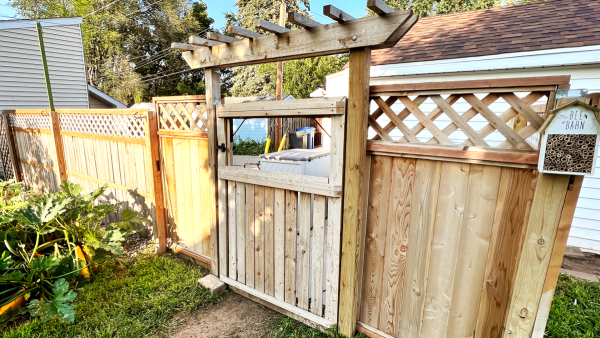
Plus I built a whole pergola out of wood I got for free, that’s something to brag about.
—Mark