
STEVE: I’m reading Michael Pollan’s big new book “How To Change Your Mind: What the New Science of Psychedelics Teaches Us About Consciousness, Dying, Addiction, Depression and Transcendence.” That long subtitle gives a sense of how much territory Pollan covers. And it’s a great story since psychedelics basically went underground after the Sixties and only recently have emerged as a fascinating new area of scientific study. It’s also interesting to see how Pollan handles his own psychedelic experiences and how they challenge his materialist worldview.
ANNE: I loved reading Madeline Miller’s “Circe,” her new novel about the ancient Greek nymph — or as Miller describes her, “the first witch in Western literature.” Before I picked this up, I had a vague memory of Circe as the sorceress who turned Odysseus’ sailors into pigs when they stopped at her island on the way home from the Trojan War. She was a side note in the male heroic epic. But Miller, who also wrote “Song of Achilles,” puts Circe at the center of her own saga -- the story of a woman who finds her own power and her own voice after being exiled from the patriarchy. Sound familiar? Impossible to read this without making mental comparisons to #MeToo -- but the descriptions of Circe’s earthy feminine magic are the perfect antidote to news headlines about contemporary male pigs.
HALEEMA: I’ve been reading The Religion of Man, a series of lectures from Rabindranath Tagore, a poet, writer, and artist from Bengal who created some of his most notable works in the early 20th century. The lectures are a series of musings on consciousness, divine experience, and more. I picked it up because it features a conversation between him and Einstein called “Note on the Nature of Reality” but find myself drawn to other lectures of his.
SHANNON: I love reading cookbooks, not just for the recipes but for the stories they tell us about food and our lives. “Feed the Resistance: Recipes and Ideas for Getting Involved” by Julia Turshen is a handbook of how to eat while being a modern activist. There are easy meals for the busy protester, like “Spicy Tandoori Cauliflower with Minted Yogurt” and big group dishes to serve to crowds at letter-writing campaigns, like “Dark Roux Mushroom Gumbo.”
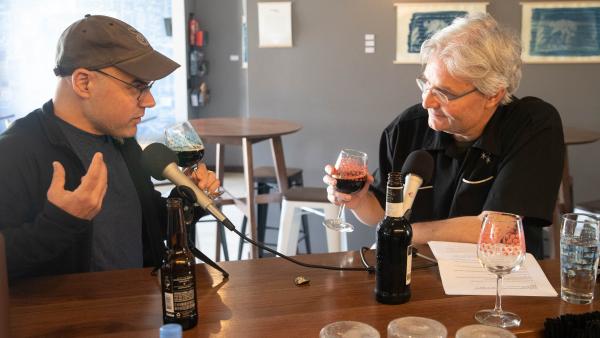
MARK: I went deep into the politics of craft beer mergers and acquisitions as part of the background for an interview with Josh Noel, a beer journalist for the Chicago Tribune who has a book coming out in June about the rise and (debatable) fall of craft beer pioneer Goose Island: "Barrel-Aged Stout and Selling Out". The short version is that craft beer is big business, and the major beer companies are starting to buy up smaller brewers, brew their recipes at a massive scale, and sell them under the same name. The strategy borrows from some interesting Stanford School of Business findings that consumers tend to associate small size with high quality — that means it behoves big beer to not mention that a formerly small brewer is no longer located at their small-scale facility. But is that still craft beer? You can head to your local small-scale brewpub to join the debate.