If you believe those at the top of society deserve their success, doesn’t that mean you think those at the bottom deserve their failure? In this hour of To the Best of Our Knowledge we’ll talk about status anxiety. Also, we’ll find out why American poverty matters to everyone.Read more

Intelligent. Optimistic. Curious.
Episode Archives

Turning thirty used to be embarrassing, an occasion for angst and misery. Today young adults are embracing thirty as cause for celebration. They’re renting yachts, giving speeches and spending thousands of dollars to celebrate the big three-oh. In this hour of To the Best of...Read more
When you think of great movie musicals, what comes to mind? “Singing in the Rain” with Gene Kelly swinging from a streetlight in the middle of a torrential downpour. How about “A Hard Day’s Night” - with images of hysterical fans mobbing the Beatles at a train station. According to Roger...Read more
Racial sensitivity and political tolerance are clearly good, but is it possible to take them too far? This hour, a look at how we talk about touchy subjects -- whether political correctness is about safety or censorship.Read more
Tom Lutz's 18-year-old son, Cody, spent day after day just lying on the couch, Lutz was surprised how angry it made him that his son was doing nothing. So Lutz decided to do something about it. He wrote a book about the history of doing nothing in America. In this hour of To the Best of Our...Read more
Get your fix of travel and crime fiction in one hour. Today, we explore the latest in international crime fiction -- from Israel, Kenya, Denmark, Spain and more. Crime is the one literary genre that crosses every border and every nationality. Because yes, we're just that bloodthirsty.Read more

Do you ever think about the way you think? Lately, we've been doing a lot of thinking about what we think about when we think about thinking. Join us as we explore the life of the mind.Read more

Every sixty seconds, 259 new people show up in the world's cities. No one is building housing for them. No government is planning for them. In this hour of To the Best of Our Knowledge we'll explore the evolving city in a world of a billion squatters, with another billion on the way.Read more

Lace up the hiking boots and grab the bug spray! Spring is here and we're heading Into The Woods. Learn how to read a forest. Unlock the meanings hidden in leaf and bole, twig and soil. And celebrate the woods in fairytale, myth, story and song.Read more

Imagine a relative who thinks sex is like a handshake. Who organizes orgies with the neighbors, doesn't mind if their partner sleeps around and firmly believes females should be in charge of everything. Actually, those ARE your relatives. They're bonobo apes and they share...Read more
On a scale of one to ten, how happy would you say you are right now? If someone could teach you how to be even happier, would you be interested? Next time on To the Best of Our Knowledge, how to boost your happiness IQ. Also, eating for pleasure, with chef and food writer Deborah Madison. ...Read more
Steve Kissing seemed like a perfect child. He was an "A" student. He excelled as an athlete. He was even an altar boy. But Steve had a secret, a secret so dark he couldn't tell anyone. Steve was possessed by the devil. In this hour of To the Best of Our Knowledge, meeting the devil. From a boy...Read more
The mind and the body meet in the brain. In this hour of To the Best of Our Knowledge, two of the world’s top brain doctors claim that what you feel affects how you feel. Dr. Norman Rosenthal, the man who discovered Seasonal Affective Disorder (SAD), says there’s an Emotional...Read more
When Donald Trump described his offensive remarks about women as "locker room talk," he implied that it's normal for men to engage in macho sexual braggadocio in gender-segregated spaces like men's locker rooms. Sociologist Amy Schalet and law professor Terry Kogan trace hidden...Read more
How many ways can you imagine the end of the world? To celebrate the end of 2012, we've gathered some of our favorite apocalyptic fiction. Doomsday scenarios from award-winning novelists and short story writers, featuring zombie invasions, mutant plagues, fire and...Read more
We’re exploring love by the numbers, this week. 36 questions, 40 first dates, and 43 equations – it’s all part of the new mathematical science of love.Read more
What would the Old Masters make of the exhibitions that get some elected officials so worked up? They might have liked them! In this hour of To the Best of Our Knowledge, new art and old masters. Simon Schama paints Rembrandt as a prankster. We’ll uncover the political...Read more
The state of Israel turns Sixty in 2008, but what is its future as a Jewish democracy? The Arab population in Israel will soon outnumber the Jews. Even diehard Zionists are calling for the creation of a Palestinian state. In this hour of To the Best of Our Knowledge, a look at the role Israeli...Read more
Life’s a sim and then you’re deleted. We always thought the computers would get us one day. Maybe they already have. According to one philosopher, odds are we’re already living the Matrix as mere programs in a computer simulation. In this hour of To the Best of Our...Read more
Peggy Orenstein didn't want children. At least she didn't think so. Children killed careers and turned smart, professional women into drones. Well, that's what Orenstein was afraid of, anyway. But after a death in the family, she changed her mind. In this hour of To the Best of Our Knowledge, to...Read more
What would you die for? And what are you willing to kill for? Democracy?On this hour of To the Best of Our Knowledge, the meaning of democracy. We’ll hear from writers Alice Walker, Sherman Alexie, Isabel Alende and Margaret Atwood. Also, tomorrow’s citizens. Are schools giving children...Read more
It's a post-apocalyptic novel that's been compared to Stephen King's "The Stand" and Cormac McCarthy's "The Road." It covers a vast time span and features a different kind of vampire, known as "virals." It's called "The Passage" and it's one of this summer's hottest books. We'll meet the author...Read more
Dan Janzen is one of the world’s leading tropical biologists. He’s spent forty years working in the Cost Rican jungle, and there’s one creature that fascinates him above all others - the moth. Janzen has found nine-thousand different species of moth in Cost Rica. In this hour of To the Best...Read more
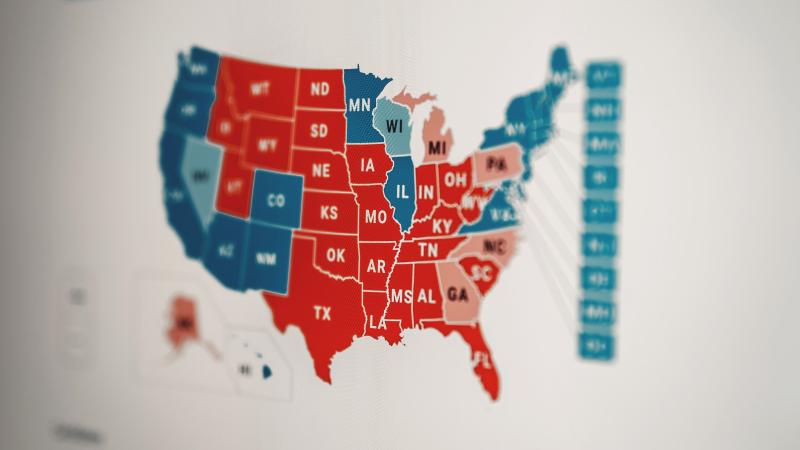
Political animosity between the right and the left is off the charts. Social scientists say we're living in one of the most polarized periods in history and that conservatives and liberals don't just disagree anymore. They hate everything about each other. It's time to de-...Read more