Bohemians used to hate anything that reeked of money. It destroyed the soul. Now, many self-styled bohemians are reveling in slate shower stalls, Range Rovers, and lava-rock grills. In this hour of To the Best of Our Knowledge, the triumphs of the “Bobo” – the Bourgeois...Read more

Intelligent. Optimistic. Curious.
Episode Archives

Suppose there's a pill that would dramatically boost your creativity. Would you take it? Psychologist Jim Fadiman says that pill exists. It's the powerful hallucinogen LSD. Fadiman describes a remarkable experiment showing how psychedelics enhanced the creativity of senior scientists. Read more
It’s been described as the Nobel Prize of motion pictures: the coveted Academy Award. One billion people around the world watch the Oscars on TV every year. In this hour of To the Best of Our Knowledge, the history and politics of the Academy Awards. Is Oscar a white man’s award? Also, Don...Read more
In the mid-80's the metal band Winger topped the charts with hits like "Seventeen." Then Grunge came along and left bands like Winger in the dust. Now, Kip Winger is back on top with a new CD that debuted at #1 on the music charts. Only this time, he's rocking the classical charts....Read more
Have you ever wished you cared less or been told to develop a thicker skin? For the polite and anxious among us, suddenly being immune to criticism and embarrassment might seem to be a superpower. In this hour, we’re exploring...Read more
President Obama is out to remake America's relationship with the Islamic world. We'll explore what this means for both the Middle East and the U.S. We'll also look at the ongoing debate over Muslim immigration in Europe, and we'll talk with a Hollywood screenwriter about his new novel on the...Read more
It used to be simple to pick out a shade of paint, before computers made almost infinite gradations possible. Now if you stare at those samples long enough they all start to look alike. It turns out color is as much a mental construct as a physical substance. In this hour of To the Best of...Read more
It's hard to wrap your head around the future of the human brrain. Augmented intelligence, memory playback, downloadable skills - it's all coming. We explore the future of the mind, and hear how a brain injury can transform your life.Read more
Sometimes all you really want to take to bed is a good book. In this hour of To the Best of Our Knowledge, meet some passionate readers. We’ll also try to find out if big time critics really hate books.Read more
The collapse of the twin towers gave birth to a strange new world. It was a city of fire and dust, rubble crunching under foot and eerie underground rivers. William Langewiesche was the only journalist with unrestricted access to Ground Zero. What he found there was startling, natural, and...Read more
Ok, take a breath. Close your eyes. Recall the home of your childhood. Can you smell the cookies in the kitchen? Can you open a drawer in your bedroom? Do you see the sunlight through a window? Every building has a story. . . And not only a story, every building has a sound.Read more
Is there such a thing as true, original creativity? Or "Are we just seeing further by standing on the shoulders of giants?", to paraphrase Sir Isaac Newton. In this hour of To the Best of Our Knowledge we'll explore the question of where good ideas come from. Steven Johnson will tell us about...Read more
So much of our daily lives gets turned into data -- our online shopping purchases, phone calls, family photos. We're all surrounded by data, and learning how to harness it could be more transformative than we realize. This week, a look at the new data specialists using their knowledge of numbers...Read more
Today's entertainment industry is shrinking the gap between real life and fantasy. Popular television shows like Big Brother turn ordinary life into an engaging drama. Virtual worlds like Second Life give users a chance to recreate themselves with the click of a button. But how real is...Read more
The holidays can be challenging. All that togetherness can be like squishing a passel of porcupines into a sardine can. In other words - not nice. On the other hand, there is a bright side. Po Bronson found it in the lives of families across the country. In this hour of To the Best of Our...Read more
Forty years ago, the U.S. ended its war in Vietnam, but we're still fighting over its legacy - in foreign policy and military strategy, and also in books and movies. But there's one question Americans rarely ask: what does the war mean to the Vietnamese themselves? We'll hear several...Read more
It’s one of the great stories in the history of books. James Murray was a poor kid from Scotland who dropped out of school at age 14. Somehow, he taught himself the history of words in various languages, and went on to create the world’s greatest dictionary. In this hour of To the Best of Our...Read more

Chefs and writers explore the language of food on the plate and on the page. We meet novelists who cook, chefs who write, and a poet of pies. It's an hour of deliciousness in words and food.Read more
Have you ever thought about money? Now, of course you have. Talking about money permeates our existence. But what if there wasn’t any money? What would you do?
The Capitol Hilton. The Eve of then-President Clinton’s Alfalfa Club Speech, one of four humorous speeches of the so-called Washington “silly season.” In this hour of To the Best of Our Knowledge, the story of a White House joke-writer, a contentious egg-timer, and the night Bill Clinton...Read more
It turns out that television may not be quite the "boob tube" and "the idiot box" that we thought it was. It seems that watching TV can actually make you smarter... by posing new cognitive challenges for your brain to solve. In this hour of To the Best of Our Knowledge, we'll explore the...Read more

David Graeber was an iconoclastic anthropologist and influential radical thinker, one who popularized the rallying cry "We are the 99%." He died on Sept. 2 in Venice, Italy at age 59. Read more
The pint-sized wizard harry Potter has conquered the book world, and it’s not just kids who love him. In this hour of To the Best of Our Knowledge, what’s behind Harry Potter’s popularity. Also, acclaimed author Katherine Paterson (pronounced Patterson) on the emotional lives of...Read more
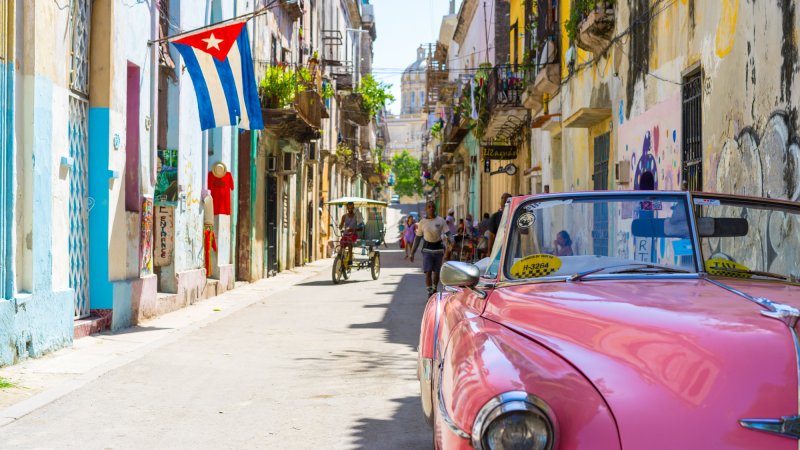
As Cuba and the U.S. restore diplomatic relations, what's in store for Americans who want to visit Cuba? And for Cubans wanting more prosperity? Steve Paulson recently traveled to Cuba and brought back new stories about our island neighbor. From diplomacy to culture, we tackle jazz,...Read more