
Roland Griffiths is a neuroscientist at Johns Hopkins. He's just turned his attention to psilocybin, a classic hallucinogen commonly known as magic mushrooms. He tells Steve Paulson about his findings.More

Intelligent. Optimistic. Curious.
Science and Technology

Piers Vitebsky is an anthropologist who studies the Eveny — also known as the "Reindeer People of Siberia." He tells Steve Paulson they keep herds of reindeer for meat, but also have personal, consecrated reindeer animal doubles, which they believe will die for them.More

Lucy Jane Bledsoe is a novelist who's made three trips to Antarctica as part of the National Science Foundation's Artists and Writers in Antarctica Program. She tells Anne Strainchamps that the place is addictive.More

In her book "On Immunity: An Inoculation," social critic Eula Biss explores the metaphors and myths hidden behind vaccine hesitancy.More

Before John Muir and Charles Darwin, there was Alexander von Humboldt, the German scientist who shaped our understanding of nature. Now, he’s largely forgotten, but biographer Andrea Wulf says he was once the world's most famous scientist. More

Tina Bertoni provides a commentary on what it was like to hunt a bear.More
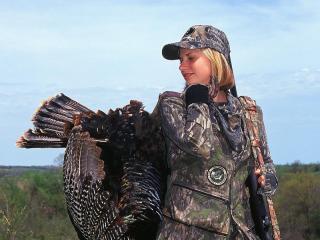
"Field and Stream" Associate Editor Kim Hiss tells Anne Strainchamps about her first hunt.More

As media historian Jonathan Sterne tells Craig Eley, signal processing shapes the sound of all vocal media, from your telephone calls to the music of T-Pain.More

In her new book, "Now I Know Who My Comrades Are," Emily Parker profiles a few online activists, and writes about how they're transforming life in China, Cuba and Russia.More

Jaron Lanier — the visionary computer scientist who helped build the internet and invent virtual reality — thinks the solution to our Facebook problems is clear.More

Ethan Zuckerman directs the Center for Civic Media at MIT. He argues that simply quitting these platforms isn't enough — we have to stick around and demand something better.More

Botanist Diana Beresford-Kroeger tells Anne that the lives of trees and human beings are inter-related all the way down to the molecular level.More

In 2015, Jay Costello was diagnosed with multiple myeloma, a treatable but incurable blood cancer. His family couldn't handle it alone, so his daughter Megan started asking for help online, fundraising via a GoFundMe page. More

Amy Stewart is a serious gardener with a side gig – writing about all the plants that could kill you.More

Machines that program themselves are all around us and they get smarter every day. But are you ready for the master algorithm that can tell a machine how to learn anything?More

Could a computer write the next West Side Story or Hamilton? That’s what composers Benjamin Till and Nathan Taylor tried to figure out—the result is a musical called “Beyond the Fence."More

Want to be successful at gambling? How about sports? Investments? Michael Mauboussi is the Head of Global Financial Strategies at Credit Suisse and author of a book where he outlines “The Success Equation."More

Psychologists John and Julie Gottman are famous for being able to predict with 94% accuracy whether a couple will break up, stay together unhappily, or stay together happily.More